Wednesday, May 6, 2015

Microcontroller Sales Regain Momentum After Slump

MCUs enter into the next wave of growth as new applications such as the Internet of Things and wearable systems emerge.


Information in this Research Bulletin comes from The McClean Report 2015, IC Insights flagship market analysis and forecast report on the IC industry.  Details are provided at the end of this bulletin.


The outlook for microcontrollers continues to strengthen following a sharp recovery in smartcards, gradual improvements in the global economy, and the emergence of new embedded-systems applications, such as wearable electronics and the Internet of Things (IoT).  These market factors, along with steady growth in automotive and portable electronics, will drive up microcontroller sales by 6% in 2015 to a new record-high level of $16.8 billion after a 5% increase in 2014, according to IC Insights’ 2015 edition of The McClean Report—A Complete Analysis and Forecast of the Integrated Circuit Industry.


A new wave of expansion in microcontrollers is underway after the market fell 3% in 2012 and saw 0% growth in 2013, mostly due to a correction in the large smartcard segment and steep price erosion—especially in 32-bit MCUs. The new 2015 McClean Report shows worldwide microcontroller sales rising by a compound annual growth rate (CAGR) of 4.2% between 2014 and 2019, reaching $19.5 billion in the final year of the forecast (Figure 1).


Microcontroller shipments surged 16% in 2014 to a new record high of 18.6 billion units, surpassing the previous annual peak of 17.3 billion set in 2012, based on market data in the 2015 McClean Report.  Worldwide MCU shipments are forecast to grow 12% in 2015 and climb by a CAGR of 7.9% in the next five years, reaching 27.3 billion units in 2019.  The new market report shows the average selling price (ASP) for microcontrollers falling by a CAGR of slightly less than -3.5% in the 2014-2019 period, going from $0.85 to an average of $0.72 in the final year of IC Insights’ forecast.


Shipments of smartcard MCUs — which now represent about half of all microcontroller units sold worldwide—surged 25% in 2014 to 9.2 billion after plunging 22% in 2013 due to a correction in this market segment and delays in new government smartcard programs around the world.  Revenues for smartcard MCUs also rebounded in 2014 with dollar volumes growing 16% to $2.6 billion after falling 11% in 2013.  While smartcards account for about half of all microcontrollers shipped worldwide, this segment represents less than 20% of total MCU revenues due to razor-thin ASPs for smartcard MCUs.


microcontroller market
Figure 1


The new edition of The McClean Report also shows unit shipments of 32-bit microcontrollers surpassing 4 /8-bit MCUs for the first time in 2015 as demand increases for higher levels of precision in embedded-processing for clusters of sensors and systems that know their locations and automatically react to operating environments.


Many new 32-bit MCU designs also contain support for wireless connections and Internet protocol (IP) communications for contact to the IoT.  Counting all types of microcontrollers—8-, 16-, and 32-bit designs—about 1.4 billion MCUs will be used in new systems being attached to the Internet of Things in 2019 compared to 306 million in 2014, according to the 2015 McClean Report.


Details of the new report, table of contents and ordering information can be found on Electronics.ca Publications’ web site: 2015 McClean Report.


Microcontroller Sales Regain Momentum After Slump

Monday, May 4, 2015

Surgical Robots -- Markets Reach $20 Billion By 2021

ELECTRONICS.CA PUBLICATIONS announces the availability of a new report entitled “Surgical Robots: Market Shares, Strategy, and Forecasts, Worldwide, 2015 to 2021″. The 2015 study has 553 pages, 216 tables and figures. Worldwide surgical robot markets are poised to achieve significant growth as next generation systems provide a way to improve traditional open surgery and decrease the number of ports needed for minimally invasive surgery.


Intuitive Surgical has market leadership position, advanced technology, an impressive installed base and a well trained group of surgeons able to manage the robots. Patients fare better when the surgery is done by surgical robots. The documentation of improvements in care delivery, the ability to ensure better outcomes from surgery promise that surgical robotics is a strong growth market.


Intuitive Surgical will be difficult to dislodge, its dominant position is based on technological excellence that keeps being improved and competitors have a difficult time catching up, much less improving on the Intuitive Surgical technology. Other leading competitors will emerge and the group of several surgical robotic companies will collectively have enough marketing dollars and enough marketing clout to drive replacement of all open surgery. Robotic surgery is positioned to become the standard of care.


Intuitive Surgical has achieved market saturation in colorectal surgery in the US, it will work on increasing its presence in other surgical market sectors. The leading robotic surgical companies are poised to grow through acquisition, purchasing smaller companies that have developed as specialized product and gained FDA approval. As detailed in the market research study there are a lot of those in every medical specialty and more to come.


The surgical robot market is characterized enormous variety and innovation.


Snake robots are wonderfully interesting surgical robots. Medrobotics offers a highly articulated multi-linked robot. It enables minimally-invasive procedures to replace open surgical procedures. It works for many parts of the anatomy. It works in places in the body that are difficult or previously impossible to reach. The robot-assist platform includes on-board visualization. and contains multiple open device channels to accept a variety of third party surgical and interventional instruments. The robot enables physicians to operate through non-linear circuitous paths, self-supported, and through a single-site access into the body.


The maneuverability of the robot is gained from its numerous mechanical linkages with concentric mechanisms. Each mechanism can be placed into a rigid or a limp state. By employing a patented “follow-the-leader” movement strategy with these alternating states, the robot can be directed into any shape through the relative orientations of its linkages.


A surgical robot recurring revenue model business model is essentially large one time purchase for a system complimented by replaceable or disposable instruments that cumulatively market a much larger and ongoing market. Vendors make money from the one time sale of a system and recurring revenue from sale of devices used in every operation.


Initially, a vendor sells and installs the surgical system into new customer accounts. Once systems are sold into customer accounts, the vendor generates recurring revenue as our customers use the system to perform surgery. To do surgeries, the customers need to buy and consume instruments and accessory products. Vendors also generate recurring revenue from system service.


The ability to deliver such an accurate dose of radiation means that the cancer can be eradicated in patients before the patient is administered a lethal dose of radiation. This prepresents a cure for cancer once it gets working according to the promise of the systems now in place. .


The Accuray radiation systems that address the oncology market are perhaps the most exciting technology ever offered to any market. Because the systems are able to control the dose of radiation Amount of activity in the market, many companies, FDA approvals, way for existing vendors to improve footprint in market


In the field of radiation oncology, the Accuray CyberKnife® Robotic Radiosurgery System is universally recognized as the premier radiosurgery system capable of delivering high doses of radiation with sub-millimeter accuracy anywhere in the body. As validated and proven in numerous peer-reviewed publications, the precision and accuracy of the system combines with continual image guidance and robotic mobility to deliver treatments characterized by high conformality and steep dose gradients.


The newest addition to the CyberKnife product line, the CyberKnife VSITM System, continues Accuray’s tradition of innovation. Building on a foundation of accuracy and precision in radiosurgery, the CyberKnife VSI System extends these benefits to fractionated high precision radiation therapy with Robotic IMRTTM that can be delivered anywhere in the body.


The automated process revolution in surgery and communications is being implemented via robots. Robots automation of systems is providing significant improvement in the accuracy of surgery and the repeatability of process.


According to Susan Eustis, lead author of the study, “Existing open surgery can be replaced in large part by robotic minimally invasive surgery (MIS) during the ofrecast period. Minimally invasive robotic surgery, new robotic radiation treatment, and emerging robotic surgical approaches complement existing surgery techniques. Soon, all surgery will be undertaken with at least come aspects of robotic surgery replacing or complementing open surgery.”


During a robot assisted surgical procedure, the patient-side cart is positioned next to the operating table with the electromechanical arms arranged to provide access to the initial ports selected by the surgeon. Metal tubes attached to the arms are inserted through the ports, and the cutting and visualization instruments are introduced through the tubes into the patient’s body.


The surgeon performs the procedure while sitting at a console, manipulating the instrument controls and viewing the operation through a vision system. When a surgeon needs to change an instrument the instrument is withdrawn from the surgical field using the controls at the console. This is done many times during an operation.


The companies that get an early foothold in the market have significant strategic advantage. The robotic surgical technique benefits hospitals by reducing the length of patient stays, thereby enabling better cost management. This factor is driving demand for surgery robot systems. Since robotics provide surgeons with a precise, repeatable and controlled ability to perform procedures in tight spaces, they are increasingly in demand.


The aging US population has supported demand, since the occurrence of health issues that require medical devices is higher in the elderly population. Buoyed by strong demand and sales, industry profit margins have increased considerably during the past five years.


Hospitals are adopting robotic surgical devices to improve their outcomes numbers. Hospitals are measured on outcomes, robots for surgery, when used by a trained physician are improving outcomes significantly.


Hundreds of universities worldwide have research programs in robotics and many are awarding degrees in robotics. These “roboticists” are increasingly being hired by Global 2000 organizations to link mobile robots (mobile computers) into existing IT systems.


Compared with other minimally invasive surgery approaches, robot-assisted surgery gives the surgeon better control over the surgical instruments and a better view of the surgical site. Surgeons no longer have to stand throughout the surgery and do not tire as quickly. Hand tremors are filtered out by the robot’s computer software. The surgical robot can continuously be used by rotating surgery teams.


Surgical robot device markets at $3.2 billion in 2014 are anticipated to reach $20 billion by 2021 as next generation devices, systems, and instruments are introduced to manage surgery through small ports in the body instead of large open wounds.


The complete report provides a comprehensive analysis including procedure numbers, units sold, market value, forecasts, as well as a detailed competitive market shares and analysis of major players’ success, challenges, and strategies in each segment and sub- segment. The reports cover markets for: medical specialties and sub-specialties.


Surgical Robots MarketDetails of the new report, table of contents and ordering information can be found on Electronics.ca Publications’ web site.  View the report: Surgical Robots Market Shares, Strategies, and Forecasts, Worldwide, 2015 to 2020.


Surgical Robots -- Markets Reach $20 Billion By 2021

Global Battery Chargers Market Report


ELECTRONICS.CA PUBLICATIONS announces the availability of a comprehensive global report on Battery Chargers markets. Global market for Battery Chargers is projected to reach US$16 billion by 2020, driven by the growing demand for battery-powered electronic devices and equipment.


As an indispensable accessory for all types of electronic devices and equipment, battery chargers are expected to witness steady demand in line with the trends in the electronics industry. Rising energy storage needs of a wide range of electronic devices used in major end-use markets including automotive, industrial, information technology, telecommunications, and consumer electronics is driving growth in the battery chargers market. Telecommunications represents the largest end-use market for battery chargers. Explosive growth in digital technology and the need to share and acquire information swiftly is boosting demand for compact, computing devices, thereby spurring demand for battery chargers. Increasing sales of smartphones, tablets, laptops, and notebooks which require batteries to function smoothly is expected to boost growth in the market.


The emergence of new classes of batteries with different materials is giving rise to increased demand for sophisticated charging mechanisms, to improve charging speed and ensure safety. With technology advancements infusing a broader range of functional characteristics into smaller and lighter formats, battery chargers market is witnessing continuous flow of new designs with efficient charge circuitry and safe charging techniques that prevent overvoltage, and protect battery and system during charging. Advanced products such as smart chargers and wireless chargers are expected to witness rapid growth driven by the growing mobility needs of modern-day consumers. Growing environmental awareness and voluntary stewardship is helping spur demand for green battery chargers powered by wind and solar energy.


As stated by the new market research report on the United States represents the largest market worldwide. Asia-Pacific ranks as the fastest growing market with a CAGR of 7.5% over the analysis period. Rising standards of living, huge population base, and adoption of mobile phones and electric vehicles represent key growth drivers in the region. In addition to India and China, demand for battery chargers in the region is high in countries such as Australia, Singapore, the Philippines, Malaysia, and Thailand, among others.


Major players covered in the report include Accutronics Limited, Analytic Systems Ware Ltd., Anoma Corp., Best Wisdom Electronics Co. Ltd., Energizer Holdings Inc., Exide Technologies, Ferro Magnetics Corporation, Flextronics, FRIWO AG, HindlePower Inc., Minwa Electronics Co. Ltd., Motor Appliance Corporation, Panasonic Corporation of North America, Phihong USA Corporation, Powerbase Industrial (HK) Ltd., Saft S.A., Salcomp Plc, Schumacher Electric Corporation, Scud (Fujian) Electronics Co. Ltd., Uniross Batteries S.A.S, and Yuasa Battery Inc.


The research report titled “Battery Chargers – Global Strategic Business Report” provides a comprehensive review of market trends, issues, drivers, mergers, acquisitions and other strategic industry activities of major companies worldwide. The report provides market estimates and projections for all major geographic markets including the US, Canada, Japan, Europe (France, Germany, Italy, UK, Spain, Russia, and Rest of Europe), Asia-Pacific (China, India, and Rest of Asia-Pacific), Latin America (Brazil and Rest of Latin America) and Rest of World. End-use sectors analyzed include Automotive, Industrial, Information Technology, Telecommunications and Consumer Products.


Battery Chargers Market ReportDetails of the new report, table of contents and ordering information can be found on Electronics.ca Publications’ web site. View the report: Battery Chargers – Global Strategic Business Report.


Global Battery Chargers Market Report

Global Market for Transformers to Reach $48.3 Billion in 2019

ELECTRONICS.CA PUBLICATIONS announces the availability of a new report entitled “Global Markets for Transformers“.  The global transformers market is expected to grow to $48.3 billion by 2019, with a five-year compound annual growth rate (CAGR) of 7.3%.  The Asia-Pacific market, the fastest-growing region of the overall market, is moving at a significant 8.1% CAGR.


Tasked with the regulation of voltage output, transformers are critical to the electricity supply chain. Globally, the demand for this technology is driven by the increasing demand for electricity, replacement of older transformers, and environmental concerns, particularly in India and China.


Indeed, the Asia-Pacific region is the largest and fastest growing segment of the global market. Valued at just $13.2 billion in 2013, the Asia-Pacific market is expected to surge to $21.1 billion by 2019. Such rapid growth is attributed to improving economic conditions and the increasing use of the region as a hub for Western markets to outsource the manufacture of their transformers.


Meanwhile, the European and North American markets are projected to grow at a healthy CAGR of 7.2% and 5%, respectively.


The upgrading of existing networks and replacement of older transformers in Western regions offer a huge growth opportunity for the transformer market. This is especially the case for power and traction transformers, which have high performance properties to increase energy efficiency and reduce electricity losses. However, in the longer-term, the developing regions, including China, Brazil, India and others, will create huge opportunities for the transformer market with the increasing demand for electricity and increasing electricity production.


Increasing raw material prices and stricter environmental regulations on carbon emission levels have forced companies to focus on the development of advanced transmission technologies that will comply with current and future environmental regulations. The pressure to develop environmentally friendly transformers is increasing even in the Asia-Pacific and other developing regions.


GLOBAL MARKETS FOR TRANSFORMERS provides an overview of the global markets for transformers and related technologies. It includes analyses of global market trends, with data from 2013, estimates for 2014, and projections of CAGRs through 2019.


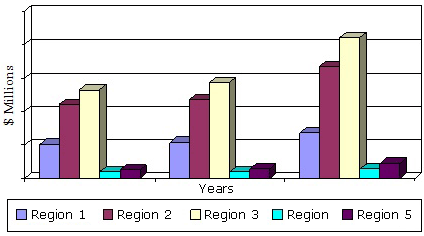
SAMPLE FIGURE

GLOBAL TRENDS OF THE HYDRAULIC PUMP MARKET BY REGION, THROUGH 2019

($ MILLIONS)


GLOBAL TRENDS OF THE HYDRAULIC PUMP MARKET BY REGION, THROUGH 2019

Global Markets for Transformers


Details of the new report, table of contents and ordering information can be found on Electronics.ca Publications’ web site.  View the report: Global Markets for Transformers.


Global Market for Transformers to Reach $48.3 Billion in 2019

Friday, May 1, 2015

Electronics Manufacturing EMS/ODM Industry Report

In 2014, thanks to a surge in shipments of mobile phone vendors such as Apple, Huawei, and Xiaomi, the EMS/ODM market rose by 5%, in contrast to a 0.5% drop in 2013. In 2014, the growth in mobile phone offset the drop in notebook computer market. In 2015, Apple mobile phone will still have strong growth potential, but with the growth rate dwarfed by that in 2014. The 4G construction of Radio Access Networks reached the peak in 2014. It is projected that the RAN market will be on the decline in 2015-2019. Moreover, the data size of mobile Internet surged, data center or cloud computing services market grew robustly. Consequently, the EMS/ODM market in 2015 increased by 3.1%. In future, smartphones will be saturated and RAN market will decline, which would prompt the growth rate of EMS/ODM to drop year by year.

IT infrastructure, with data center or cloud computing services as the core, will constitute the biggest driving force. The server shipments will grow robustly in 2015, with an overall shipment estimated to increase by 13.5%. In particular, the ODM-Direct will rise by 20%. Server OEM and ODM-Direct are basically monopolized by the Taiwanese vendors, with a global market share of over 90%. Taiwan has a complete industrial chain of server, which is viewed as an extension of the computer. As the Taiwanese vendors have stronger and stronger technical ability, the future equipment cabinet solution of Server+Routing+Storge+Switching will gain more market space.

However, the European and US EMS/ODM vendors are dedicated to improving profitability by reducing the revenue proportion of telecom and communication infrastructure, and intensifying the expansion to industrial, medical, and automotive sectors. Meanwhile, they have also strengthened the weakness in components, and ventured into the upstream sector of industrial chains. But compared with the Taiwanese vendors, the European and US EMS/ODM peers lagged far behind in the field of components. They would make up for the shortcomings through M&A, with, for example, Jabil’s acquisition of Nypro.

Details of the new report, table of contents and ordering information can be found on Electronics.ca Publications" web site. View the report: Global and China EMS/ODM Industry Report, 2014-2015.

IPC-8701 - First Manufacturing Acceptability Standard for Photovoltaic (Solar) Module Assemblies Debuts

IPC-8701 Acceptability specs will help provide infrastructure for solar panel assembly


Solar panels have been in volume production for quite some time, but there are still just a limited number of standards to help original equipment manufacturers (OEMs) and electronics manufacturing service (EMS) companies determine whether completed modules meet design and assembly requirements. IPC recently published the first document to set common acceptance criteria for finished assemblies.


IPC-8701, Final Acceptance Criteria Standard for PV Modules-Final Module Assembly, was written as a first step toward providing an infrastructure that will help companies increase volumes, hold costs down and obtain common acceptance requirements between customers and manufacturers. Like IPC standards for printed boards and other products, it eliminates the inconsistency that comes when companies all use different criteria for determining acceptability requirements.


“EMS companies are getting different criterion from each customer,” said Jasbir Bath, senior director, Standards at IPC. “It’s challenging to work with these different acceptance criterion, in terms of training of manufacturing personnel on the line and manufacturing quality inspections.”


In 60 pages, IPC-8701 describes best practices for inspecting photovoltaic assemblies, providing more than 120 photos to clarify the differences between acceptable and unacceptable elements. It focuses on the housing and support electronics used by both crystalline silicon cells, which dominate shipments today, as well as thin film cells in photovoltaic (PV) module production.


“This covers things like ensuring that the frame is square, the junction box is connected properly and that the label is in place and readable,” Bath said. “It even includes packaging in the shipping box, describing the protective packaging that keeps panels from getting cracked or undergoing too much stress during transit.”


One section focuses on the frames that enclose and support the solar cells. These are critical for product quality and they help shape the perception of quality.


“IPC-8701 sets parameters for both incoming frames and acceptable quality after manufacturing,” Bath said. “It describes what’s acceptable in terms of scratches, sharp edges, burrs, etc. There are specifications on how large scratches can be.”


The document also sets acceptance requirements for the junction boxes of the module.  Parameters for determining whether the plug-in terminals in the junction box pass or fail are also detailed.


 also looks at the sealant, tapes and potting compounds used in the module. The bus bars that connect solar cells in the module are also described. One of the final production steps, creating labels, is also included. The legibility of serial numbers and manufacturing date codes are described along with information on where these labels should be placed.


IPC-8701 PDF Standard download

IPC-8701


For additional information or to purchase the standard, visit IPC-8701.


By Terry Costlow, IPC online editor


IPC-8701 - First Manufacturing Acceptability Standard for Photovoltaic (Solar) Module Assemblies Debuts

Global Battery Chargers Market Report


ELECTRONICS.CA PUBLICATIONS announces the availability of a comprehensive global report on Battery Chargers markets. Global market for Battery Chargers is projected to reach US$16 billion by 2020, driven by the growing demand for battery-powered electronic devices and equipment.


As an indispensable accessory for all types of electronic devices and equipment, battery chargers are expected to witness steady demand in line with the trends in the electronics industry. Rising energy storage needs of a wide range of electronic devices used in major end-use markets including automotive, industrial, information technology, telecommunications, and consumer electronics is driving growth in the battery chargers market. Telecommunications represents the largest end-use market for battery chargers. Explosive growth in digital technology and the need to share and acquire information swiftly is boosting demand for compact, computing devices, thereby spurring demand for battery chargers. Increasing sales of smartphones, tablets, laptops, and notebooks which require batteries to function smoothly is expected to boost growth in the market.


The emergence of new classes of batteries with different materials is giving rise to increased demand for sophisticated charging mechanisms, to improve charging speed and ensure safety. With technology advancements infusing a broader range of functional characteristics into smaller and lighter formats, battery chargers market is witnessing continuous flow of new designs with efficient charge circuitry and safe charging techniques that prevent overvoltage, and protect battery and system during charging. Advanced products such as smart chargers and wireless chargers are expected to witness rapid growth driven by the growing mobility needs of modern-day consumers. Growing environmental awareness and voluntary stewardship is helping spur demand for green battery chargers powered by wind and solar energy.


As stated by the new market research report on the United States represents the largest market worldwide. Asia-Pacific ranks as the fastest growing market with a CAGR of 7.5% over the analysis period. Rising standards of living, huge population base, and adoption of mobile phones and electric vehicles represent key growth drivers in the region. In addition to India and China, demand for battery chargers in the region is high in countries such as Australia, Singapore, the Philippines, Malaysia, and Thailand, among others.


Major players covered in the report include Accutronics Limited, Analytic Systems Ware Ltd., Anoma Corp., Best Wisdom Electronics Co. Ltd., Energizer Holdings Inc., Exide Technologies, Ferro Magnetics Corporation, Flextronics, FRIWO AG, HindlePower Inc., Minwa Electronics Co. Ltd., Motor Appliance Corporation, Panasonic Corporation of North America, Phihong USA Corporation, Powerbase Industrial (HK) Ltd., Saft S.A., Salcomp Plc, Schumacher Electric Corporation, Scud (Fujian) Electronics Co. Ltd., Uniross Batteries S.A.S, and Yuasa Battery Inc.


The research report titled “Battery Chargers – Global Strategic Business Report” provides a comprehensive review of market trends, issues, drivers, mergers, acquisitions and other strategic industry activities of major companies worldwide. The report provides market estimates and projections for all major geographic markets including the US, Canada, Japan, Europe (France, Germany, Italy, UK, Spain, Russia, and Rest of Europe), Asia-Pacific (China, India, and Rest of Asia-Pacific), Latin America (Brazil and Rest of Latin America) and Rest of World. End-use sectors analyzed include Automotive, Industrial, Information Technology, Telecommunications and Consumer Products.


Battery Chargers Market ReportDetails of the new report, table of contents and ordering information can be found on Electronics.ca Publications’ web site. View the report: Battery Chargers – Global Strategic Business Report.


Global Battery Chargers Market Report